Match Readiness Beyond Physical Preparation
To compete is a matter of far more concern than mere fitness issues or skill. And match readiness holds a whole different ballgame: the mental state, emotional balance, and adaptability to changing opponents and conditions. Often a physically prepared athlete or team finds itself in the midst of well-forged strength and skills tested yet disadvantaged by the lack of all other attention.
Readiness can happen in various degrees as well. Training builds capacity, but what defines capacity is set by preparation and expectations and the instant mindset. If your readiness is not balanced, your performance would swing like a yoyo from game to game.
Mental Preparation and Focus
Mental readiness shapes how competitors interpret what happens around them. A focused athlete processes information more efficiently, filtering out distractions and reacting to relevant cues. Without this focus, even simple situations can feel overwhelming, leading to hesitation or rushed decisions. Mental preparation often includes visualization, pre-match routines, and strategies for regaining attention after mistakes. These tools do not eliminate pressure, but they help prevent pressure from dominating awareness. Consistent focus allows preparation to surface when it is needed most, rather than remaining unused potential.
Emotional Regulation Under Anticipation
Anticipation before a match can heighten emotions such as excitement, anxiety, or fear of failure. Emotional regulation is not about suppressing feelings but about preventing them from disrupting performance. Athletes who struggle with regulation may start too aggressively, lose composure after setbacks, or withdraw when momentum shifts. Those who manage emotions effectively tend to stay responsive and adaptable. Emotional readiness allows competitors to experience intensity without being controlled by it, preserving clarity during critical moments.
Routines and Familiarity
Routines provide stability in an unpredictable environment. Warm-ups, preparation rituals, and consistent schedules reduce cognitive load and create a sense of familiarity. This familiarity signals safety to the nervous system, which can lower unnecessary stress responses. When routines are disrupted, some competitors feel unsettled, while others adapt quickly. The effectiveness of routines depends on flexibility. Strong routines support readiness, but rigid dependence on them can become a weakness when conditions change unexpectedly.
Reading the Competitive Environment
Match readiness includes awareness of context. Weather, venue, officiating style, opponent behavior, and crowd dynamics all influence how a match unfolds. Athletes who can read these factors early often adjust faster, conserving energy and avoiding unnecessary risks. This awareness is learned through experience and reflection. It allows competitors to respond strategically rather than react emotionally, aligning effort with the realities of the situation instead of an idealized plan.
Decision-Making Under Intensity
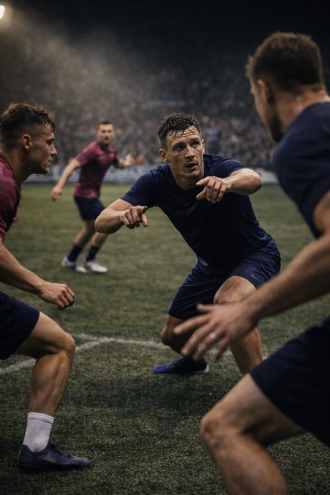
Competition compresses time and magnifies consequences. Decisions that seem easy in training can become highly complex when they are made in the presence of fatigue, noise, and stakes. The effect of intensity on decision-making, and why we might see skilled performers err, may be understood in similar fashion and deepens our understanding to some degree.
Making decisions under stress involves both behavior into automatic habits and conscious ones. Their balance shifts during high-stress competition, leaning toward habitual rather than reflective thinking.
Speed Versus Accuracy Trade-Offs
Under pressure, the demand for speed often increases. Faster decisions can create advantages, but they also raise the risk of mistakes. Skilled performers learn when to act quickly and when to slow the moment down. This balance depends on experience and situational awareness. In high-intensity phases, relying on well-practiced patterns can maintain accuracy. Problems arise when competitors rush decisions that require assessment or hesitate in situations that reward decisiveness.
Cognitive Load and Fatigue
As a match progresses, cognitive fatigue builds alongside physical fatigue. Attention narrows, reaction times slow, and working memory becomes less reliable. This affects decision quality, particularly in complex situations. Teams that manage cognitive load through clear roles and communication reduce the burden on individuals. Training that simulates fatigue conditions can also help performers recognize and compensate for declining mental sharpness during competition.
Risk Assessment in Competitive Moments
Pressure changes how risk is perceived. Some competitors become overly cautious, avoiding actions that could lead to mistakes. Others take excessive risks, driven by urgency or frustration. Effective decision-making requires calibrated risk assessment. This means understanding score, time remaining, and team capability. Competitors who align risk with context tend to make decisions that support long-term performance rather than short-term emotional relief.
Learning From In-Game Feedback
Matches provide constant feedback through outcomes, opponent responses, and internal sensations. The ability to interpret this feedback without overreacting is critical. Adjustments made during competition often determine performance more than initial plans. Competitors who remain curious rather than defensive can adapt strategies and recover from errors. This flexibility transforms mistakes into information instead of sources of panic or blame.
Teamwork and Collective Performance
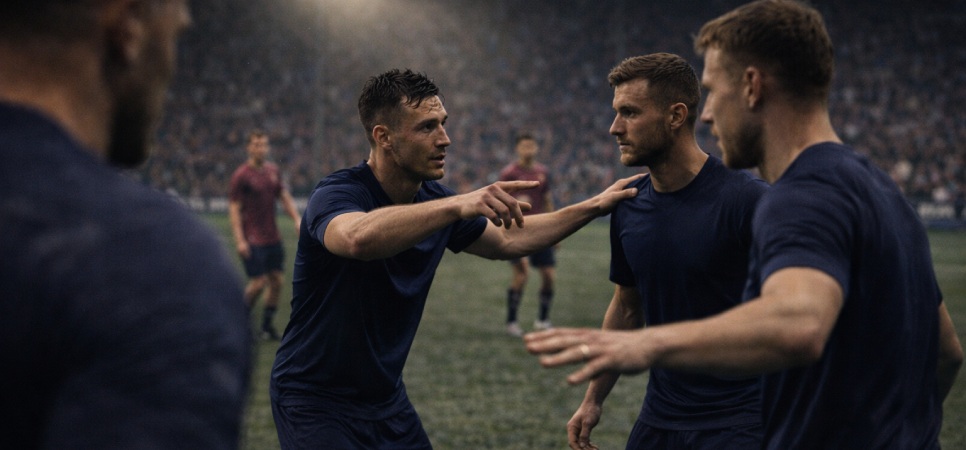
The player ability does not operate in isolation; rather, it is usually conditioned by the group dynamics and its influences on decision-making, effort analysis, and emotional delivery. During the game, teamwork becomes one of the factors embodied in performance.
Performance relies upon trust, communication, and common understanding. Others being equal, the action will determine whether a group will perform cohesively or fracture under pressure.
Communication Under Stress
Stress alters communication patterns. Messages may become shorter, louder, or less precise. In some cases, communication breaks down entirely. Teams that perform well under pressure establish clear communication norms before competition. These norms prioritize clarity and relevance. Simple, consistent cues often outperform complex instructions when intensity rises. Effective communication helps align actions and reduces uncertainty during fast-changing situations.
Role Clarity and Responsibility
Clear roles support teamwork by reducing hesitation and overlap. When responsibilities are understood, individuals act decisively without waiting for confirmation. Under pressure, role confusion can lead to gaps or duplication of effort. Teams that revisit and reinforce roles during preparation tend to adapt better when conditions change. Role clarity also supports accountability, allowing teams to address issues constructively rather than through blame.
Emotional Contagion Within Teams
Emotions spread quickly in group settings. Confidence, frustration, and anxiety can transfer from one player to another, shaping collective behavior. Leaders play a key role in managing emotional tone, but every team member contributes. Teams that recognize emotional contagion can interrupt negative spirals through calming behaviors or supportive communication. Positive emotional regulation strengthens resilience during difficult phases of a match.
Trust and Decision Support
Trust allows teams to function efficiently under pressure. When trust is high, individuals support each other’s decisions rather than second-guessing them. This reduces cognitive load and maintains flow. Trust is built through consistent behavior and shared experiences. On match day, trust enables risk-taking within agreed boundaries, supporting creativity and adaptability without descending into chaos.
Pressure, Expectations, and External Evaluation
Performance does not happen in a vacuum. Expectations of coaches, fans, the media, and clubs influence how such pressure is experienced. The external evaluation could be a source of motivation or distraction and that depends on how the athlete internalizes it.
Understanding the sources of pressure enables the athlete to put the stress into context, thus dissociating self from effect. This dissociation supports healthier performance responses.
Internal Versus External Pressure
Internal pressure arises from personal standards and goals. External pressure comes from perceived judgment or consequences. While both influence performance, they operate differently. Internal pressure can drive focus and effort when balanced. External pressure often increases anxiety and self-consciousness. Competitors who distinguish between these sources can prioritize controllable factors, reducing the impact of external noise on decision-making.
Audience and Environmental Influence
Crowds, venues, and atmosphere alter perception and arousal levels. Some performers thrive on audience energy, while others find it distracting. Familiarity with competitive environments reduces their impact. Exposure during training and reflection after matches helps competitors interpret environmental cues as neutral or supportive rather than threatening. This reframing allows attention to remain on task-relevant information.
Media Narratives and Performance Identity
Media narratives simplify complex performances into stories of success or failure. These narratives can influence self-perception, especially during periods of scrutiny. When competitors internalize these stories, performance identity becomes fragile. A more stable approach views performance as a process rather than a verdict. This perspective supports learning and consistency, even when external narratives fluctuate dramatically.
Consequences and Fear of Failure
Fear of failure intensifies when consequences feel personal or irreversible. This fear can narrow focus and inhibit decision-making. Addressing it requires reframing failure as feedback rather than judgment. Environments that emphasize learning alongside accountability reduce fear-driven behavior. When consequences are understood realistically, competitors are more likely to engage fully rather than play to avoid mistakes.
Evaluating Performance Beyond Wins and Losses
Statistics only tell of some black or white relationships. They do not allow for other shades of interpretation. The effects of many factors over a playing season need to be explained.
This approach supports development by focusing on controllable behaviors and decisions rather than outcomes alone.
- Consistency of decision-making under pressure
- Quality of execution relative to preparation
- Adaptability to changing match conditions
- Communication effectiveness within the team
- Emotional regulation after errors or setbacks
Process-Oriented Assessment
Process-oriented assessment examines how performance unfolded rather than only what happened at the end. This includes preparation quality, adherence to strategy, and response to challenges. By focusing on process, competitors can identify strengths and weaknesses with greater accuracy. This approach reduces emotional volatility and supports long-term development, especially in environments where outcomes are unpredictable.
Individual Growth Within Team Results
Team outcomes can obscure individual progress. Evaluating individual growth within collective performance helps maintain motivation and clarity. This includes assessing role fulfillment, skill application, and decision quality. Recognizing individual development encourages accountability and engagement, even during losing periods. It also strengthens team cohesion by valuing contribution alongside results.
Learning Loops and Adjustment
Effective evaluation creates learning loops that inform future preparation. Feedback gathered after competition should translate into specific adjustments rather than vague intentions. These loops connect match experience with training priorities. When evaluation is structured and consistent, performance evolves systematically rather than through trial and error. Learning becomes an ongoing process rather than a reaction to isolated outcomes.
When Preparation Meets Reality
Playing reveals the interaction of preparation, pressure, and context. Performance is readiness, decision-making, teamwork, and meaning-making of outcomes. Looking beyond wins and losses can allow competitors to gain some indication of what actually drives success. This perspective protects one's resilience, learning, and readiness in a world where pressure will be wherever results are never guaranteed.
Head to head.#FIFAWorldCup pic.twitter.com/zmQ7pHd9xl
— FIFA World Cup (@FIFAWorldCup) February 1, 2026