Rethinking Success in Player Development
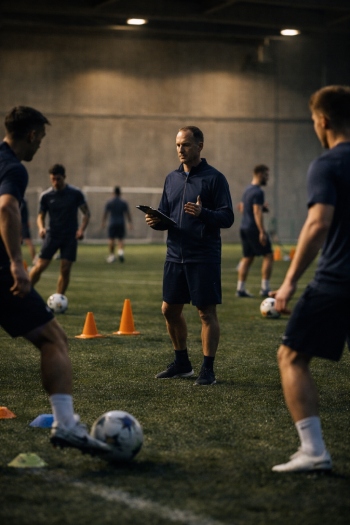
Development-focused coaching comes with the need for redefinition of success. Rather than merely evaluating how well the team performs today, it judges the way individual players are building up the fundamental abilities that will assist them over several years rather than just weeks. This fosters on short-term setbacks as an invaluable method for learning and attaches more importance to habits of consistency, reflection, and incremental improvement.
The same culture that also defends itself against outcome-driven environments as these are usually detrimental to experimentation and creativity. If a player perceives the resultant equation of every sequence of actions, they avoid risks, amputate their development, and feel discouraged. A broader concept of success involves patience and indirectly calls the players to understand that increases in performance are only built through hard work and perseverance.
Balancing Results With Learning Objectives
Competitive outcomes provide useful feedback, but they should sit alongside clear learning objectives. A match can be successful even in defeat if players apply training concepts, communicate effectively, or demonstrate improved decision-making. Coaches who clarify these goals help players focus on controllable factors rather than final scores alone. Over time, this balance creates athletes who can perform under pressure without being consumed by it.
Creating Environments That Reward Improvement
Training environments shape behavior. When improvement is recognized and reinforced, players are more likely to invest in long-term growth. This can include acknowledging technical progress, tactical awareness, or leadership qualities during reviews. Such recognition signals that development is valued, even when results fluctuate. Players learn that progress is measured by effort, understanding, and adaptability.
The Role of Patience in Competitive Pathways
Player pathways are rarely linear. Periods of rapid improvement are often followed by plateaus or temporary regressions. A patient approach allows players to move through these phases without unnecessary pressure. By maintaining perspective, coaches can support individuals through challenges while keeping long-term goals in view. This patience often distinguishes sustainable programs from those that burn out talent early.
Technical Development as a Foundation
The well-executed technical skills are the conditions necessary for any other performance aspects to exist. Tactical skills suffer when technical skills are absent, while being physically efficient depends on the latter. The long-term goal requires an apprenticeship with basic skills first and then with optional exercises, expanded development with enhanced difficulty. That way, players become more competent to sustain competition in different situations.
Structured repetition-based technical training helps in coordinating one's thoughts. Skills are inclined not to be isolated as they become mechanically automatic, and now, the focus is more on building scenarios targeted at competition. This approach also binds the technical processes to their real context so that every athlete will understand what skills, when, and how to execute them effectively.
Building Strong Fundamentals Early
Early stages of development focus on core skills such as control, movement, and coordination. These fundamentals are revisited throughout a player’s career, as even advanced athletes benefit from refinement. By establishing strong foundations, players gain confidence and versatility, which supports later specialization without limiting creativity or adaptability.
Progressive Skill Complexity Over Time
As players mature, technical demands increase. Skills are combined, performed under pressure, or executed at higher speed. Progression is key. Introducing complexity too early can overwhelm players, while delaying it can slow development. Well-designed programs adjust difficulty based on readiness, ensuring steady advancement without sacrificing quality.
Linking Technique to Decision-Making
Technique alone is insufficient if it is not supported by good decisions. Training that integrates choice and awareness helps players understand the purpose of their skills. By practicing in game-like situations, athletes learn to select appropriate actions quickly. This connection between technique and cognition is central to effective long-term performance.
Tactical Understanding and Game Intelligence
Tactical development helps players read the game, anticipate situations, and coordinate with teammates, changing the individual proficiency into a collective one. Long term growth should mean understanding principles of play not just a memorization of stereotyped rules and regulations, as this will help players to play against varied systems, team styles, and levels of competition.
Occasioning with age and experience tactical learning changes in its concepts. The desire to implement basic positioning and roles in their game for those at lower age levels versus becoming focused towards spatial awareness, timing, and the level of decision-making in the advanced ones. At all times, reflection and conversations play key roles in deepening understanding.
Teaching Principles Instead of Set Plays
Principle-based teaching encourages flexibility. When players understand why certain actions are effective, they can adjust to new scenarios independently. This contrasts with over-reliance on rehearsed plays, which may fail when conditions change. Principles provide a framework that supports creativity and problem-solving on the field.
Developing Awareness and Anticipation
Game intelligence depends on perception. Players learn to scan their surroundings, interpret cues, and anticipate outcomes. Training that emphasizes observation and analysis sharpens these skills. Over time, players become quicker thinkers who can influence play even without direct involvement in the ball or action.
Encouraging Communication and Leadership
Tactical success is collective. Communication helps align individual actions with team objectives. As players develop, they are encouraged to take responsibility for organizing and supporting teammates. This builds leadership qualities that extend beyond tactics, fostering confidence and accountability within the group.
Physical Preparation for Sustainable Performance
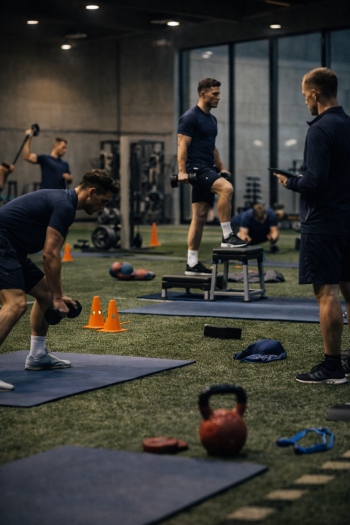
Physical development is important if you want to be able execute all the technical and tactical skills. The long-term approach prioritizes health, quality of movements, and gradual conditioning over the short-term intensity. This approach reduces injuries and prepares the players for the higher levels of competition. The preparations are specific to developmental stages rather than just imposed on all.
Quality programs will incorporate conditioning as an integral part of the skill work itself. Instead of compartmentalizing fitness and separating it from the skills, training must replicate the physical realities of the contest. It is crucial for players to develop strength, endurance, and speed in ways that directly enhance the demands of the sport.
Age-Appropriate Conditioning and Load Management
Physical readiness varies widely among players, especially during growth phases. Age-appropriate conditioning respects these differences. Load management helps prevent overtraining and burnout by balancing intensity and recovery. This careful approach supports consistent participation and long-term athletic health.
Movement Quality and Injury Prevention
Quality of movement underpins physical resilience. Emphasizing balance, coordination, and proper mechanics reduces injury risk and enhances efficiency. Preventive strategies, such as mobility work and gradual progression, are integral to development. Players who move well can train more consistently and perform with greater confidence.
Integrating Recovery Into Development Plans
Recovery is often overlooked in competitive environments. Long-term development recognizes rest, sleep, and nutrition as essential components of progress. Educating players on recovery habits empowers them to take ownership of their bodies. This knowledge becomes increasingly important as training loads increase.
Mental Resilience and Psychological Growth
Mental Toughness allows the players to handle pressure, bad breaks, and expectations. It develops through experiences and reflection rather than some quick-fixes. Long-term approaches treated psychological growth as a skill set that could be trained and refined alongside physical and technical abilities.
With so much thought being placed into this reasoning, it needs to be considered seriously. Resilience refers to players keeping focus, learning from their mistakes, and keeping motivation high over long periods. Athletes acquire self-confidence in open and nonthreatening environments and through normalizing challenges, in turn supporting resilience.
Learning to Cope With Pressure and Setbacks
Competition inevitably brings disappointment. Teaching players how to respond constructively to setbacks builds resilience. Reflection, goal-setting, and emotional regulation strategies help athletes maintain perspective. Over time, these skills enable players to perform more consistently under pressure.
Building Confidence Through Mastery and Feedback
Confidence grows from competence. Clear feedback and achievable challenges reinforce a sense of progress. When players understand what they are improving and why it matters, motivation increases. This internal confidence is more durable than praise based solely on results.
Encouraging Ownership and Self-Reflection
Players who take responsibility for their development are more engaged and adaptable. Encouraging self-reflection helps athletes identify strengths, weaknesses, and learning opportunities. This habit fosters independence and prepares players for environments where guidance may be less direct.
Structuring Training and Competition for Growth
The way training and competition are organized has a lasting impact on development. Programs designed with progression in mind align objectives across sessions, seasons, and stages. This structure ensures that learning builds logically over time rather than reacting impulsively to short-term outcomes.
Competition remains a vital teacher. When integrated thoughtfully, it reinforces training themes and exposes players to real challenges. The goal is not to avoid competition, but to use it as part of a broader learning process.
Designing Sessions With Clear Developmental Goals
Effective sessions have purpose beyond immediate performance. Clear goals guide activity selection and feedback. Players benefit from understanding what each session aims to develop, creating continuity and focus across training cycles.
Using Competition as a Learning Tool
Matches reveal strengths and weaknesses that training alone cannot. Post-competition analysis helps players connect experiences to development objectives. This reflective process turns games into learning opportunities rather than verdicts on ability.
Aligning Short-Term Activities With Long-Term Vision
Consistency across time is essential. Short-term activities should support long-term goals rather than contradict them. Alignment ensures that daily decisions contribute to overall development, reducing confusion and maintaining direction for both players and coaches.
Key Elements of Long-Term Player Development
Long-term development is supported by a combination of interconnected elements that guide daily practice and decision-making. These components work together to create environments where players can grow steadily without undue pressure from short-term results.
- Clear development objectives that extend beyond wins and losses
- Progressive technical and tactical challenges aligned with player readiness
- Age-appropriate physical preparation and recovery strategies
- Ongoing psychological support and opportunities for reflection
- Consistent structure across training, competition, and progression pathways
By keeping these elements in balance, programs can support both performance and personal growth.
A Long View on Player Growth
To develop players beyond the scores, consider a commitment to patience, structure, and perspective: technical skill, tactical understanding, physical preparation, and mental resilience are not independent goals but parts of a continuing process brought about by experience and guidance. While development is a priority, results will often follow naturally afterwards.
With a long-term approach, athletes will exhibit adaptability, confidence, and readiness to address any challenges that come their way in the future. By favoring growth as much as competition, coaches and organizations assist in high-level performance and continue to cultivate a healthier environment for sports. The true measure of success becomes not just what the players accomplish today but who they are by their journeys.
Head to head.#FIFAWorldCup pic.twitter.com/zmQ7pHd9xl
— FIFA World Cup (@FIFAWorldCup) February 1, 2026